A storefront has only a few seconds to tell people what kind of business is behind the door. The most memorable storefronts in Dallas do that before a customer reads a menu, checks a price, or steps inside. Some rely on architecture, while others use windows, materials, lighting, signage, or a strong sense of place.
For this list, I focused on Dallas stores that offer a clear design lesson rather than simply expensive finishes. From downtown luxury retail to Bishop Arts and Henderson Avenue, these examples show how very different businesses can make their physical location easier to recognize and remember.
What Can Storefronts in Dallas Teach Business Owners About Design?
The strongest storefronts in Dallas are not all designed the same way. What they share is alignment between the building, neighborhood, brand, and customer experience.
That matters in a competitive retail market. Dallas-Fort Worth retail vacancy remained tight at 5.4% in Q2 2026, while CBRE identifies experiential mixed-use destinations and continued luxury-retailer expansion as important drivers of DFW retail demand.
For storefront design Dallas inspiration, watch for five things: a clear entrance, readable branding, materials that support the brand, windows that frame the experience, and lighting that works after dark. The broader Dallas storefront design scene offers everything from adaptive reuse to highly engineered flagships.
What Are 10 Dallas Storefronts Worth Studying?
Here are the 10 Dallas storefronts worth studying:
1. Forty Five Ten: Materials, Architecture, and Art
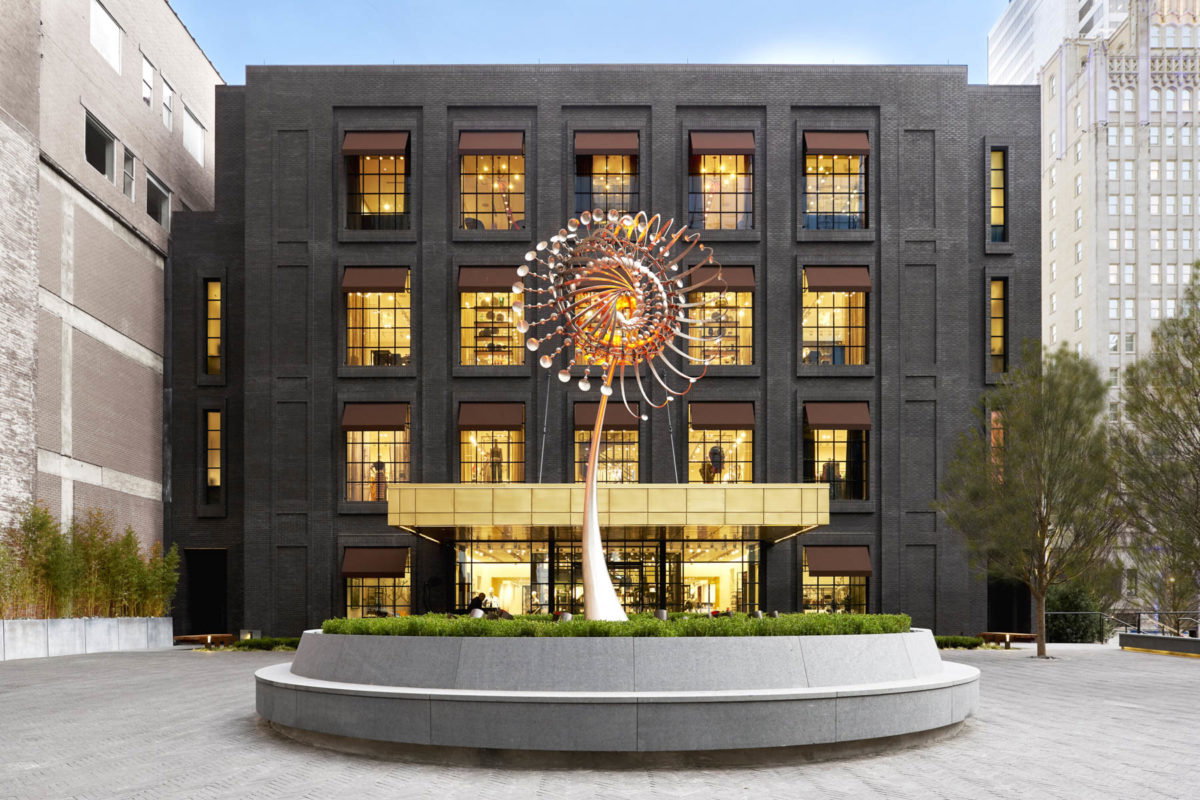
The Forty Five Ten downtown flagship shows how a storefront can feel connected to the city rather than looking like a standard retail box. The 45,000-square-foot building combines iron-spot brick, bronze paneling, custom steel windows, landscaping, and art to create a distinctive arrival experience.
The lesson for business storefront design is simple: materials, architecture, landscaping, and art can begin communicating the brand before a customer reaches the entrance.
For anyone collecting storefront design ideas, Forty Five Ten also shows that a storefront does not need one oversized sign to establish a strong presence.
2. RH Dallas: Turning a Storefront Into a Destination

RH Dallas on Knox Street takes the idea of a retail storefront beyond a conventional shop. The three-story, 70,000-square-foot gallery blends retail, residential design, hospitality, landscaped outdoor spaces, and architectural details. Glass-and-steel French doors, courtyards, terraces, and a dramatic 42-foot-wide cascading water feature shape the arrival experience.
For retail storefront design Dallas inspiration, the main takeaway is the preview. The exterior immediately gives visitors a sense of what to expect inside.
Smaller businesses can apply the same idea through windows, lighting, landscaping, materials, and a clearly defined entrance.
3. HERMÈS Dallas: Working With Existing Architecture
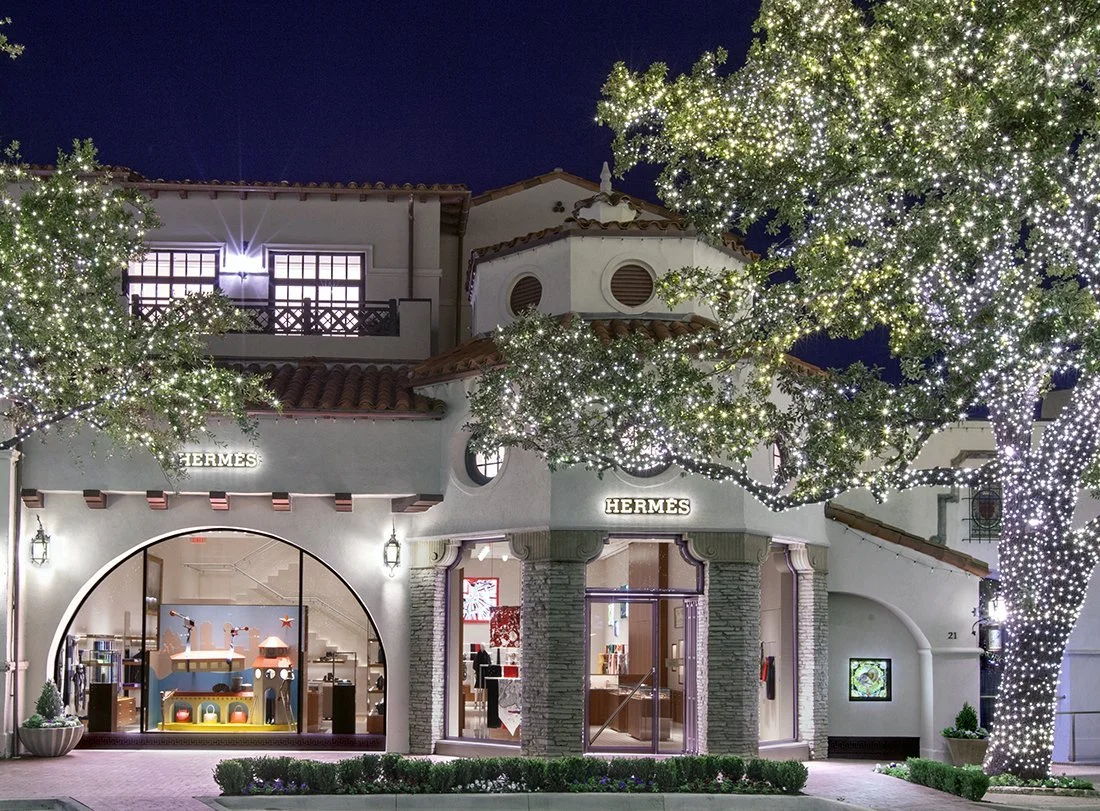
The HERMÈS boutique at Highland Park Village demonstrates how a global luxury brand can work with established architecture instead of overpowering it. A documented expansion incorporated an octagonal entry pavilion, daylight, stone, glass, and outdoor terrace space into the customer experience.
This offers a valuable commercial storefront design Dallas lesson. Strong branding does not always require covering a façade with logos or promotional elements.
Proportion, craftsmanship, carefully selected materials, and well-positioned identification can create just as much impact.
4. Chanel Dallas: Using Windows and Contrast With Restraint
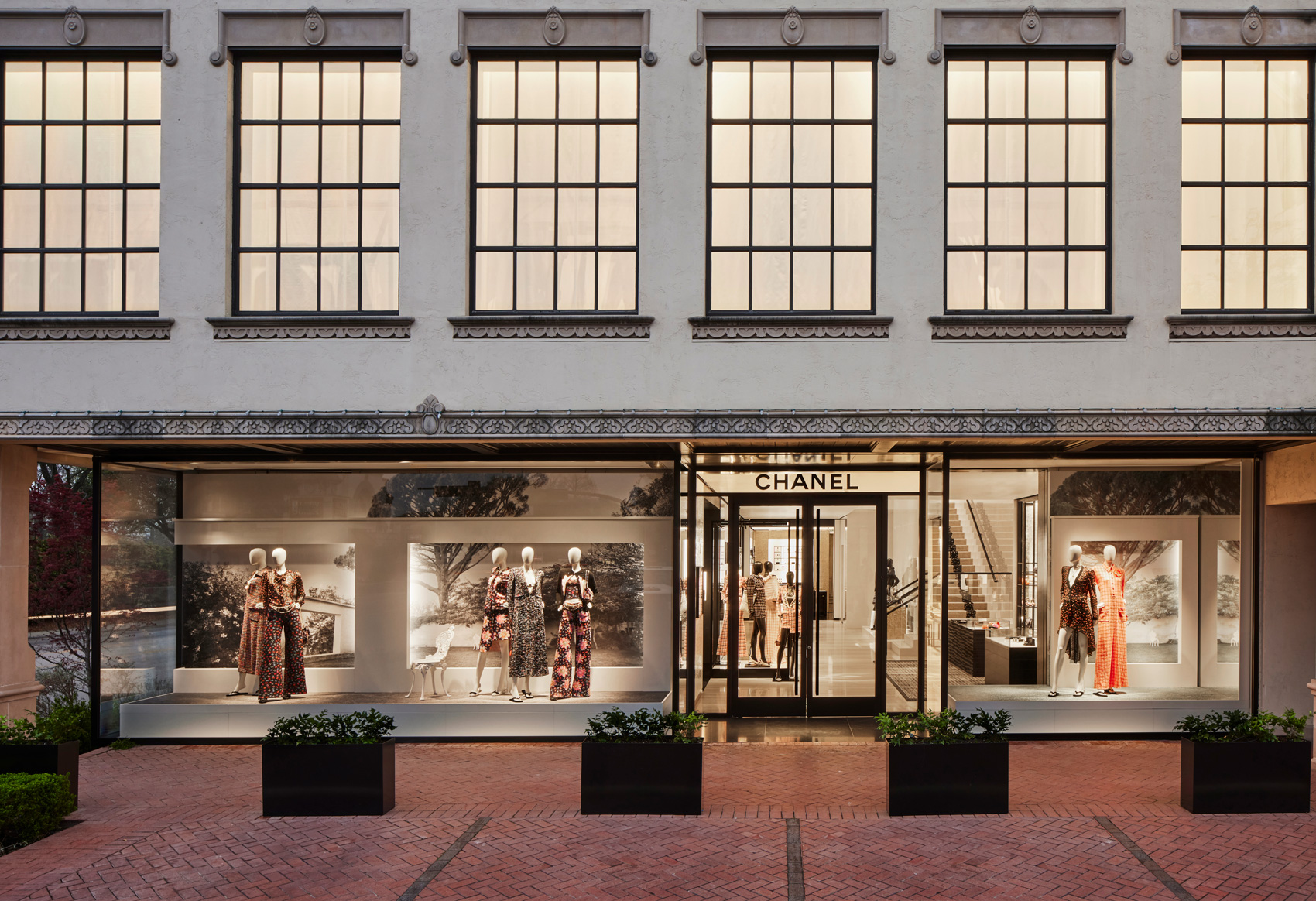
Chanel’s redesigned Highland Park Village boutique reopened in 2024 as a two-story, approximately 6,500-square-foot store. Its cream-colored terracotta and stucco façade, large paneled windows, restrained palette, and carefully staged displays create a smooth transition between the shopping center’s Spanish architecture and Chanel’s visual identity.
The Dallas store design lesson here is contrast. A restrained exterior can make merchandise, windows, and signage feel more important.
Retailers do not need to fill every available window with promotions. Sometimes a cleaner storefront creates a stronger impression.
5. Maison Goyard: Keeping Brand Identity Consistent
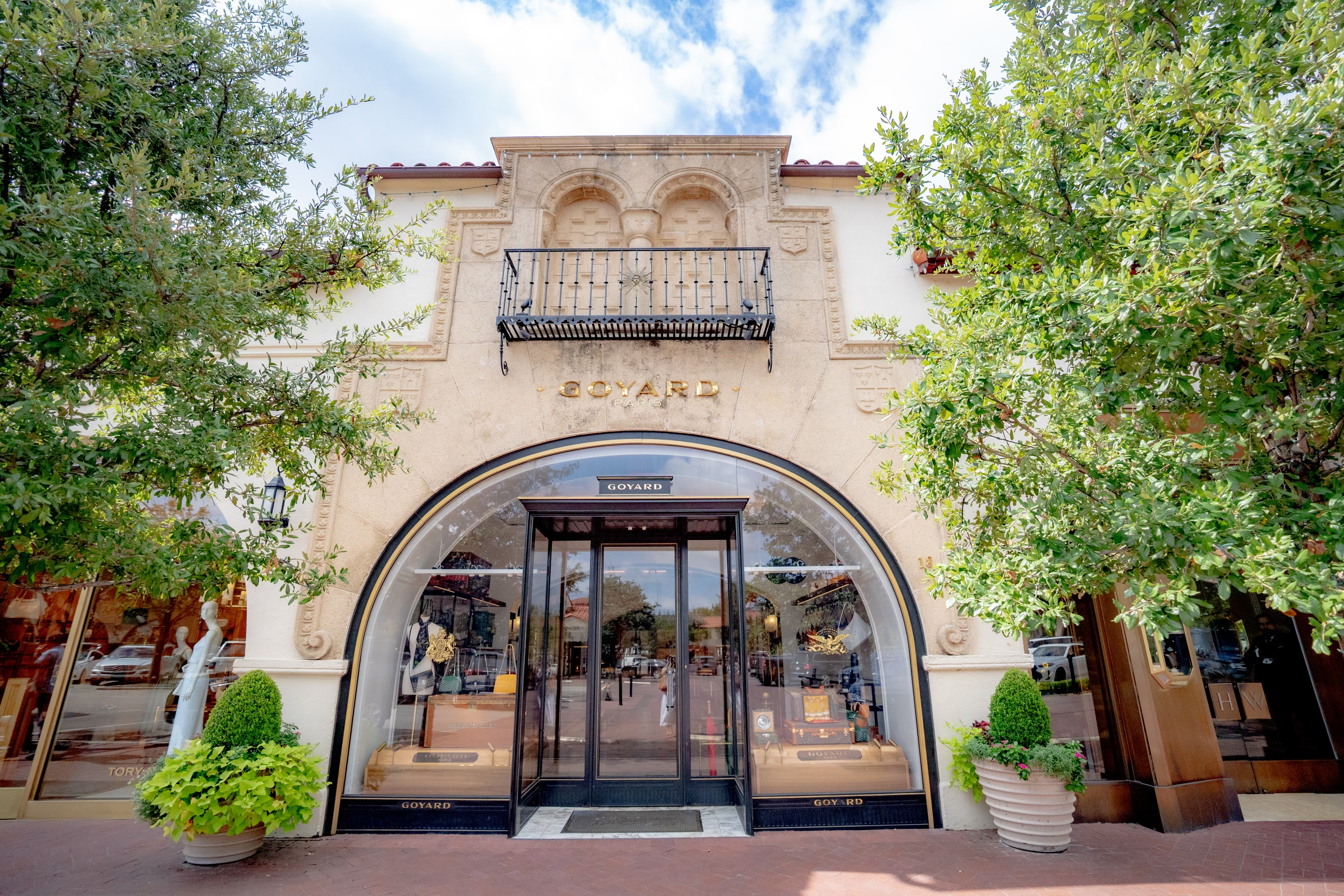
The 2019 Goyard Dallas project involved a 2,268-square-foot remodel at Highland Park Village, with new casework and finishes and Welch Hall Architects listed as the design firm.
Businesses studying storefronts Dallas TX can take an important lesson from this approach. Stores may occupy completely different buildings, but consistent typography, colors, materials, window presentation, and signage help the brand remain recognizable.
That variety is one reason storefronts in Dallas provide useful inspiration for businesses planning their own physical locations.
6. KHAITE Dallas: Modern Retail Through Restraint

The KHAITE Dallas store uses steel, grey plaster, reflective finishes, translucent glass, and controlled lighting to create a highly edited retail environment. Large-scale display elements establish a simple visual rhythm rather than filling the space with unnecessary decoration.
Among modern storefronts Dallas businesses can study, KHAITE demonstrates the value of restraint.
A premium storefront does not necessarily need more materials, graphics, or signage. A limited palette, clear visual hierarchy, purposeful lighting, and consistency can create a stronger result.
7. Tecovas: Bringing Local Identity Into Retail Design

The Tecovas Henderson Avenue location is a 4,000-square-foot store designed by Michael Hsu Office of Architecture. Its Old West-meets-contemporary style combines industrial and rugged materials with warmer textures, while the store also incorporates a Dallas skyline element. That makes it a strong example of Dallas retail design.
The lesson is not to copy Western décor. Instead, find the part of your own brand story that belongs in the physical space. A mural, custom sign, architectural material, artwork, or local reference can help one location feel connected to its city.
8. Miron Crosby: Strong Storytelling in a Small Footprint
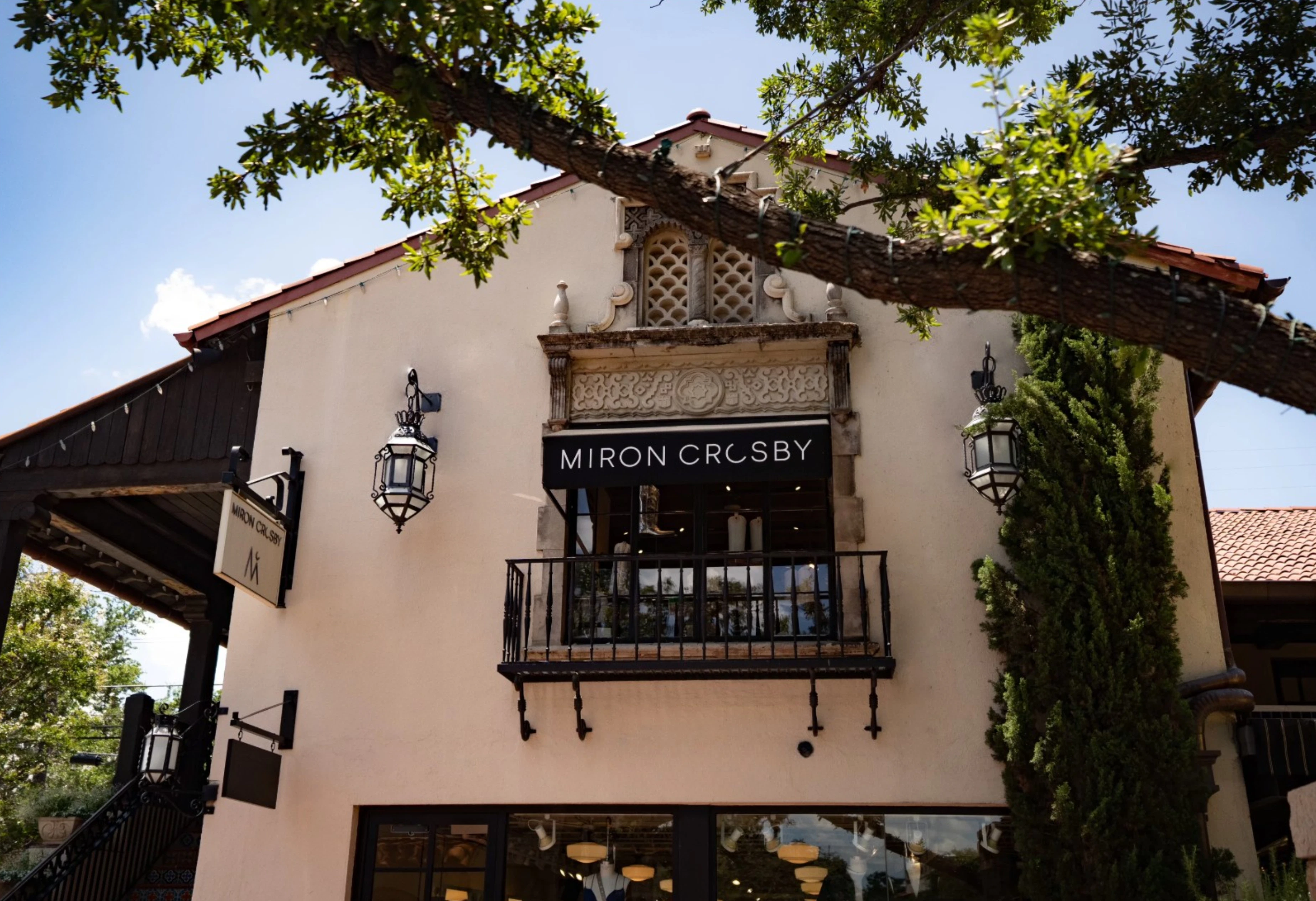
Miron Crosby’s Dallas studio is only about 490 square feet, yet the space maintains a clear identity inspired by the founders’ West Texas cattle-ranch background.
For storefront inspiration Dallas businesses with smaller locations can use, the key lesson is focus.
Choose one clear story and carry it through the colors, materials, signage, merchandise, and customer experience. Smaller storefronts often become more memorable when they stop trying to communicate too many ideas at once.
9. The Wild Detectives: Letting the Building Support the Brand

The Wild Detectives operates from a renovated Craftsman home in the Bishop Arts District. The residential character fits naturally with its bookstore-and-bar concept, which is built around browsing, conversation, readings, music, and community events.
It is one of the more unique storefronts Dallas visitors can study because the architecture itself supports the business concept.
Adaptive reuse can work particularly well when the building and customer experience reinforce each other. An unusual property does not always need to be hidden behind a conventional commercial façade.
10. Emporium Pies: Creating a Cohesive Neighborhood Storefront

Emporium Pies’ Bishop Arts flagship feels closely connected to its walkable neighborhood. The brand has described its design philosophy around cohesion, with smaller details selected to work together as one complete experience.
The main takeaway is that storefront design goes beyond the sign above the entrance. Windows, graphics, colors, packaging, lighting, entrance details, and signage should all feel like they belong to the same business.
That consistency becomes especially important when planning custom storefront signs Dallas businesses need to integrate with an existing brand identity.
What Design Patterns Repeat Across the Best Dallas Storefronts?
Across these storefronts in Dallas, four patterns show up repeatedly:
- Context matters. Strong stores respond to the street, property, or neighborhood.
- Fewer elements can create more impact. Visual clutter rarely improves recognition.
- Windows and entrances are part of the brand. They should not be treated as leftover space.
- Lighting and signage should work together. A storefront needs to function after sunset as well as during the day.
That last point matters for storefront signage Dallas projects. Businesses considering illuminated identification can study current LED sign trends in Dallas and compare LED vs. neon signs before deciding which visual approach works for the building.
If neon is part of the concept, understanding how much neon signs cost can also keep design ideas grounded in a realistic budget.
How Can Seasonal and Experiential Design Keep a Storefront Fresh?
Permanent architecture should establish the business identity, but temporary elements can keep a storefront current.
Window graphics, removable panels, lighting scenes, seasonal messages, and temporary installations can change the customer experience without rebuilding the façade.
The guide to Halloween storefront sign ideas shows how seasonal elements can sit around permanent branding rather than replace it.
Experiential design can work inside as well. For service businesses, LED neon signs for salons and spas offer an example of how one illuminated feature can create a recognizable photo moment without turning an entire interior into signage.
What Should Dallas Businesses Borrow From These Examples?
For businesses studying storefronts in Dallas, start with visibility and context rather than decoration.
Ask:
- Is the entrance obvious?
- Can the business name be read from the actual viewing distance?
- Do the windows strengthen or weaken the brand?
- Does the storefront still work after dark?
- Do the materials fit the property?
- Is there one clear focal point?
For wider local inspiration, iconic signs and landmarks in Dallas show how scale, lighting, recognizability, and location can help places become memorable.
If the project requires new signage fabrication or installation, comparing top sign companies in Dallas can also help business owners understand what to ask about design, permits, fabrication, materials, installation, and after-sales support.
Dallas Storefront Design Inspiration Worth Applying
The best storefronts in Dallas show that memorable design does not come from copying another business. It comes from creating a clear entrance, recognizable branding, thoughtful materials, strong windows, and lighting that works with the architecture.
Whether the space is a luxury flagship, neighborhood shop, restaurant, or small retail store, the most useful lesson is consistency. Take inspiration from the principles behind these Dallas storefronts, then adapt them to your own building, customers, and brand.
What Questions Do Business Owners Ask About Storefront Design?
What Makes a Storefront Visually Effective?
A strong storefront makes the entrance and business identity easy to understand. Readable signage, purposeful materials, controlled lighting, and uncluttered windows usually work better than several competing messages.
Should Every Storefront Use Illuminated Signage?
No. Illumination matters most when a business needs nighttime visibility or when surrounding lighting makes an unlit sign difficult to identify. The right sign depends on viewing distance, location, and operating hours.
How Important Are Windows in Retail Storefront Design?
For many retailers, very important. Windows can introduce merchandise, reveal the atmosphere inside, create depth, frame views, and support seasonal campaigns without changing permanent signage.
What Should a Small Business Copy From Luxury Storefronts?
Not the budget. Copy the discipline: fewer materials, clearer hierarchy, consistent typography, purposeful lighting, and a well-defined entrance.
How Can a Storefront Feel Local Without Looking Themed?
Use subtle connections to the neighborhood, building, materials, history, or customer base. Local relevance works best when it supports the brand rather than becoming decoration for its own sake.